
From the colourful mountain pastures in the Alps to the diverse meadows of the Swiss Plateau, from richly structured mixed forests to glittering lakes, Switzerland packs an astonishing wealth of species-rich habitats into a somewhat confined area. This mosaic could be one of the largest treasure troves of biodiversity in Europe, a wealth that shapes the landscape and people and secures their livelihoods. However, this abundance is no longer a self-evident reality and has become very vulnerable. Intensive land use, a high consumption of resources, settlement pressure and the infiltration of pollutants have severely altered these natural cycles since the middle of the 20th century. Valuable habitats have dwindled severely or been altered.
Simultaneously, the awareness is growing that every decision reached in agriculture and forestry, energy production and spatial planning, nature conservation and environmental protection and the management of green spaces and consumption influences this diversity. Therein lies an opportunity, as Switzerland continues to harbour extraordinary potential when it comes to preserving this natural and cultural heritage and, indeed, reinvigorating it. Where people act with foresight, streams can develop freely and meadows can bloom with greater colour. Biodiversity is more than an ecological asset, as it is the basis of our lives and, indeed, our responsibility.
Continued pressure on biodiversity
This report illustrates the condition of and changes in biodiversity in Switzerland in a clear and differentiated manner. On the basis of data, studies and expert know-how, it describes how biological diversity has developed in different habitats. The focus is on changes in the last 15 years. The report also illustrates which factors currently have the greatest impact on biodiversity and which events in politics and society have been important in this respect. It describes how we can set the best course for future generations, thus enabling them to create a basis for life that draws on rich and functioning biodiversity.
The facts are clear. Historic losses in biodiversity are considerable. The decline may have slowed since the turn of the millennium, but biodiversity in Switzerland is still under pressure from several mutually reinforcing encumbrances, including intensive land use, environmental pollution, invasive non-indigenous species and climate change. As humans, we place significant stress on nature and the landscape and leave our tracks and traces everywhere.
Settlements, traffic routes and land used for intensive agriculture lead to a loss of semi-natural habitats, carve up the landscape and prevent a genetic exchange between populations of fauna, flora and fungi. Continually high influxes of nutrients and pollutants damage grassland, forests and bodies of water and adversely affect many species. Simultaneously, invasive non-indigenous species are spreading, displacing native wildlife. Increasing light pollution disrupts the natural rhythms of many creatures. We also use every last corner of the landscape for our leisure activities. Climate change alters temperature and precipitation, leading to the displacement of vegetation zones. However, certain thermophile species, Alpine species and aquatic organisms suffer extremely as a result.
Promoting biodiversity works
Numerous other developments need to be regarded in a more nuanced fashion. While numerous species and habitats continue to be displaced, others remain stable at different levels or experience positive development. The Swiss confederation, cantons, municipalities, organisations, researchers, local communities and numerous others are still actively involved in the preservation and promotion of biodiversity and its benefits for us human beings. Programmes and projects have managed to slow losses on a local, regional and, in part, even national level. Populations of certain species have recovered. These examples are proof that the promotion of biodiversity works if it is implemented in a targeted and consistent manner.
Coarse woody debris (CWD) is increasing in forests, and the number of giant trees has doubled in recent decades. Both of these benefit numerous species. In agricultural areas, the ecological quality of many biodiversity promotion areas is developing in valleys and summer grazing pastures at a gratifying rate. Towns and municipalities are implementing biodiversity concepts, and numerous initiatives motivate the population and economy to play an active part. Upgraded green areas in towns and agglomerations provide a habitat for species and recreational spaces for the population. Water bodies profit from revitalisation. The Alps still include areas with the character of a wilderness, and extensively cultivated alpine meadows host a high degree of biodiversity. Species which had become extinct in Switzerland, such as the bearded vulture, have established themselves again.
Continuation and enhancement
Successful projects should set a precedent, and the benefit they provide for people should be broadly communicated. Biodiversity requires more space, greater quality and improved networking. A consistent cross-sectoral approach, measures in all sectors relevant to biodiversity and cooperation between the federal government, cantons, municipalities and society are required for this purpose. What is needed is known. Existing laws and strategies, ranging from the preservation of habitats of national significance and the realisation of ecologically infrastructure to ecological rehabilitation of hydro power, need to be implemented with determination. Subventions should reward practices that promote biodiversity. And local protagonists, populations and the economy should be included to a greater degree – through involvement, guidance and practical knowledge.
Biodiversity is essential. It is fundamental when it comes to achieving clean water, fertile soil, climate regulation, health, protection against natural hazards – and for our quality of life. Many signs point in the right direction, and these routes should now be resolutely followed. Further courses need to be routed correctly in an expedient and timely manner. Declarations of intent, strategies and planning must be followed by concrete actions. In order to preserve biodiversity in the long term and show sufficient impact on a national level, existing endeavours must be continued and, indeed, strengthened. The path Switzerland has embarked on can therefore be continued with further success, and its biodiversity can be revived again.
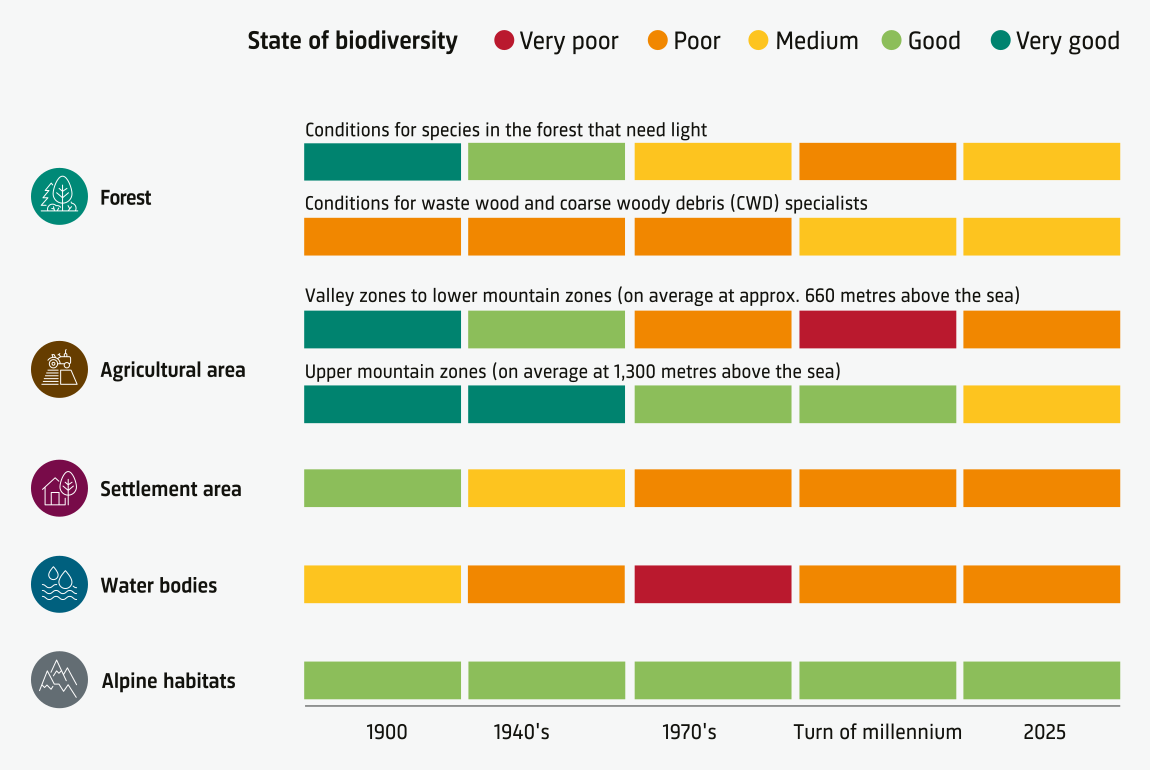
Development of biodiversity in a variety of habitats since 1900
Derivation (Chap. 1): Development of biodiversity is supported in all habitat areas to achieve substantiated developments of influencing factors and descriptions of known effects and available records since 1900 for different periods. The depictions illustrate the state of biodiversity at the end of each time period in each case.